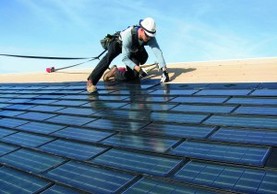
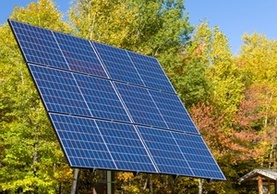
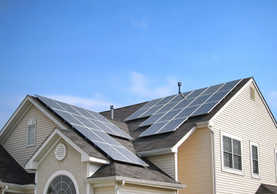
The most basic definition of a photovoltaic solar shingle is a solar panel that is configured as a roof shingle that is integrated into a conventional asphalt type shingle roof. Recent advances in the efficiency of solar shingles or tiles have also led to the development of solar shingles that will integrate into shake, concrete, tile and slate roofs as well. They look a lot like a normal asphalt type shingle and protect your roof from rain like a conventional shingle but have the added bonus of being able to convert solar energy into electrical energy for your home.
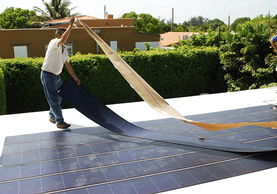
You may have heard of thin film types of solar panels. They are a newer type of solar panel and less frequently used for homes. But they are growing in popularity.
The thin film panel gets its name from how it’s produced. Layers of semiconductor materials (silicon, cadium telluride, and copper indium gallium selenide) are rolled out as a film on a surface.
Thin film solar panels tend be less efficient than crystalline solar panels, and it requires a lot of roof space. They also tend to degrade more quickly, so companies may offer shorter warranties to homeowners.
But thin film is also inexpensive and more flexible than crystalline solar cells. They can be manufactured into shingles. So for those who don’t like the appearance of solar panels on a roof, thin film is a good alternative. There may be local solar rebate incentives for installing these types of solar panels.
Keep in mind that solar manufacturing is a very competitive field. Researchers keep coming up with ways to make solar cells more efficient. The latest technologies use solar inks, dyes, mirrors, and plastics.
Solar panels are made up of crystalline cells. A typical home rooftop solar panel contains up to 40 solar cells. There are two main types of solar panel cells: polycrystalline and monocrystalline. It’s important to understand the difference between the two, because your choice will determine cost and amount of roof space your solar installation requires.
Monocrystalline solar panel cells tend to achieve higher levels of efficiency because they are made of more pure silicon. You will notice a uniformity to their coloring. Their cylindrical shape also helps these cells achieve higher efficiency. When choosing between a monocrystalline and polycrystalline solar panel system, it will be important to find your solar sun number score. This will allow you to find out how much potential your system will have with your location and amount of sunlight it receives.